

The YUFE initiative “English for Entrepreneurship” launched in 2023, is aimed at law and economics students at universities belonging to the YUFE consortium. At its very core is international teamwork, through which participants develop their own unique business concepts.
At Nicolaus Copernicus University in Toruń, the project is implemented by the University Center for Foreign Languages in cooperation with partner universities: the University of Antwerp, the University of Cyprus, the University of Rijeka, and the University of Eastern Finland. On behalf of the Nicolaus Copernicus University, the initiative was launched by lecturers Joanna Ososińska-Ciechomska, Agnieszka Pawlikowska, and Kamila Szczepanowska, with who the following interview was conducted.
Julia Lewandowska: What is the BIP “English for Entrepreneurship” initiative?
Kamila Szczepanowska: It is a linguistic project aimed at students from universities belonging to the YUFE alliance. It is based on working in international teams to come up with their own business concept. The program is intended for students of law, business, and management who have a basic understanding of entrepreneurship. We focus primarily on the development of language skills that are useful in a business environment—such as building partnerships, drafting contracts, and creating a company business portfolio.
JL: How did this idea originate? What was the starting point?
KS: The idea came about when NCU joined the YUFE alliance. We decided to use this opportunity to establish collaboration with language centers at other universities and develop a joint, international program for students.
JL: What benefits does this project bring to the UCJO?
KS: First and foremost, it allows us to establish contacts with instructors and lecturers from other universities and to learn about various models of language education. It is also an opportunity to develop new programmes and enrich our academic offer.
JL: What impact does the initiative have on NCU and its community?
KS: Students gain access to a modern form of language training, combining online and in-person components. They can also travel to a partner university to experience its culture and educational system. For the university, it is also an important promotional tool—during the first edition, we hosted students from abroad and presented our offer to them. We know that some of them decided to return to participate in further projects, which is a great source of gratification for us.
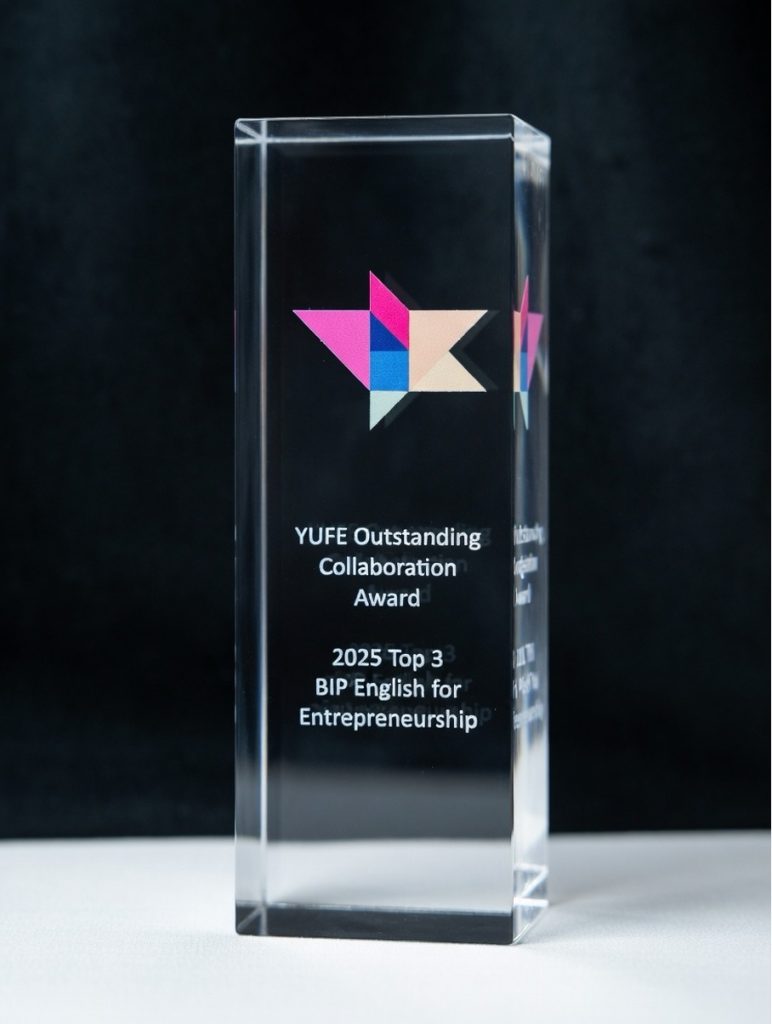
JL: It’s worth mentioning that the initiative was recently recognized with the YUFE Outstanding Collaboration Award
KS: Yes, we are very happy about it. It’s very motivating when our collaboration and commitment are recognized. Working on a project like this is unique because we participate in it alongside students. This mutual energy translates into greater openness on their part, the improvement of teamwork skills, time management skills, and digital competencies—not just their language skills.
JL: How can NCU students get involved in this initiative?
KS: We are planning the third edition of the programme for the next academic year. Information will be posted on the UCJO website in June. Classes will be held from March to July, and an in-person component will take place in Rijeka. We encourage law and business students to familiarize themselves with the programme and join the project.