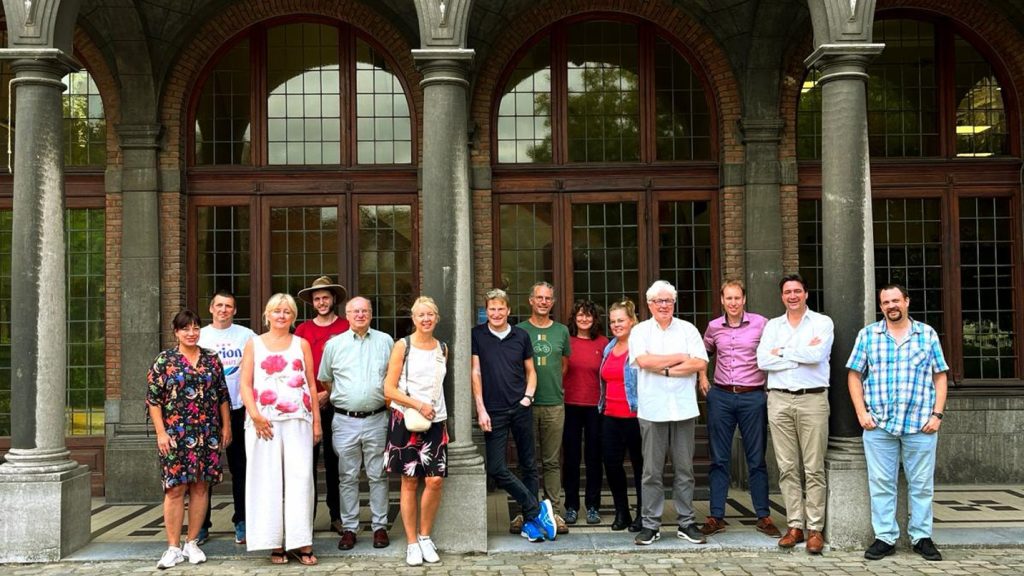
BioYUFE is an initiative involving cooperation between scientists in the field of biology whose universities are members of the YUFE alliance. This initiative was the winner of the YUFE Outstanding Collaboration Award. Prof. Werner Ulrich, the project’s initiator, and Prof. Marcin Koprowski spoke with Julia Lewandowska.
JL: Would you please tell our readers what the BioYUFE initiative is all about?
Prof. Werner Ulrich: YUFE, or Young Universities for the Future of Europe, is one of the 65 consortia currently in existence, established in 2017 at the initiative of President Emmanuel Macron and the European Commission. The aim of this cooperation is to create joint research initiatives and degree programs, as well as to intensify international collaboration. Within this alliance, BioYUFE brings together biology-related faculties. Our goal is to strengthen international cooperation and provide students with the opportunity to receive an education at the top European level.
JL: What was the origin of this initiative? Was there a specific starting point?
Prof. Marcin Koprowski: Five years ago, the idea for BioYUFE was initiated by the then Dean of the Faculty of Biological and Veterinary Sciences, Prof. Werner Ulrich. The idea was simple: since the deans of biology faculties in Poland regularly meet, their counterparts from the YUFE alliance could also organize such meetings as part of such an influential initiative such as the European Universities.
The idea proved to be well received. The first gathering took place in September 2021. Further in-person meetings are held annually, and in addition, we see each other online once a month on average. In addition, BioYUFE webinars are held on the consortium’s YouTube channel. Interestingly, there are probably no deans left in our group now —BioYUFE is based on the commitment of enthusiastic staff members, both administrative and academic.
JL: What are the benefits of this initiative for the Faculty and the University as a whole?
Prof. Werner Ulrich: Visibility is definitely one of the most significant benefits for the Faculty. Thanks to international collaboration, our staff members have contact with other universities and colleagues abroad. It gives them more opportunities to receive grants or to be partners in grant initiatives. There is also more experience regarding the current trends in study programs, learning techniques, and, of course, personal networking.
Currently, we are active on several fronts. The first is expanding our offerings of webinars and open lectures. The second element involves joint study programs—we are currently working on developing a joint Environmental Management program.
JL: What is the overall impact of this initiative on the academic community and its surroundings?
Prof. Marcin Koprowski: I think that, to some extent, various activities overlap. In May, we are organizing what is known as “Staff Week” as a part of the Erasmus+ program. It is intended for both our partners from the BioYUFE alliance and those with whom we have agreements under the Erasmus+ program. The main theme of the event is the ecology of military areas. I am hoping that our guests from Ukraine will join us to present issues regarding the impact of military operations on the natural world – these topics have already been discussed during our webinars.
During this week, we’re also venturing outside the university walls. Workshops on the environmental significance of the Toruń forts are being organized for our guests. This will allow them to experience the city as well.
JL: What are your plans for the future? What can we expect in the near future?
Prof. Werner Ulrich: We hold regular meetings with the aim of launching a joint master’s program in environmental management in the near future. We hope it will launch in the 2027/2028 academic year.
JL: BioYUFE was awarded the YUFE Outstanding Collaboration Award—what does this mean for the team?
Prof. Marcin Koprowski: It is a very motivating award and a great joy for us. We connected online with Nick Bradshaw, who received the commemorative statuette during the event in Maastricht—he showed it to us with great enthusiasm. I think this will further motivate us to continue our work.
JL: How can one get involved in this initiative—both as a student and as a UMK employee?
Prof. Marcin Koprowski: In my experience, collaboration works best when employees volunteer to participate. Next year, we’ll be organizing another training session on how to write scientific articles, so there will be many opportunities. As for students, they’re regularly updated on activities such as the Erasmus+ Blended Intensive Programme.